Evolution
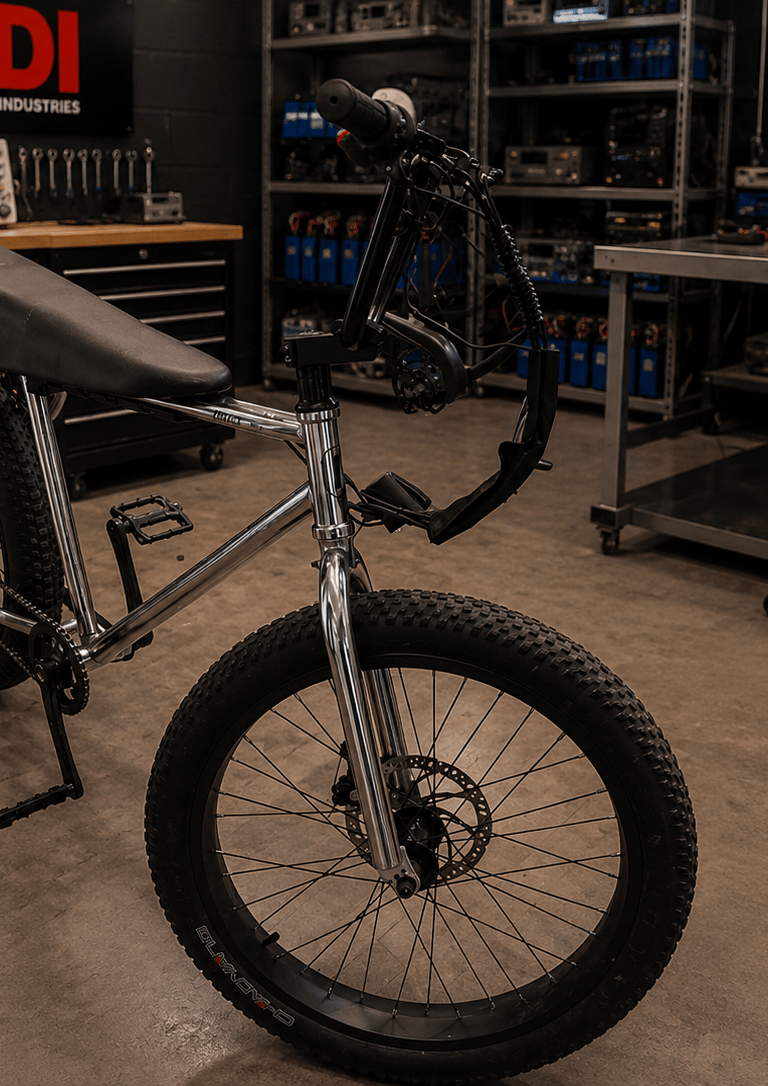
By the time I started building this electric bicycle, I had already spent years taking machines apart, rebuilding them, and learning how every decision affected the final product. My Blue Gas Rebel had already taught me that I could build a complete motorized bicycle from the ground up.
This project was different.
It wasn’t about proving that I could build another machine.
It was about learning how to engineer an electric one.
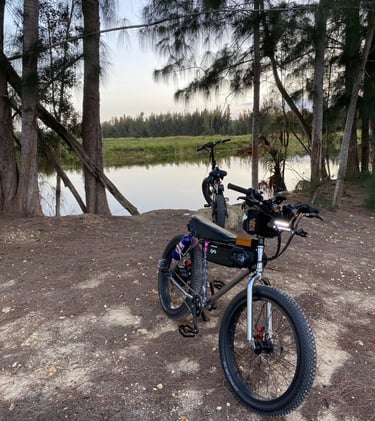
This became my first official ADI electric bicycle.
Not because it was my first e-bike.
Because it was the first one where every engineering decision became intentional, documented, and constantly questioned.
Starting With a Blank Canvas
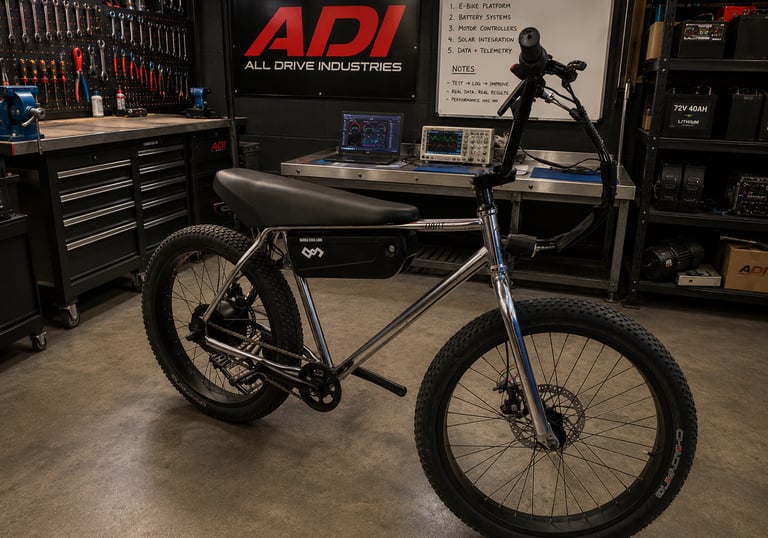
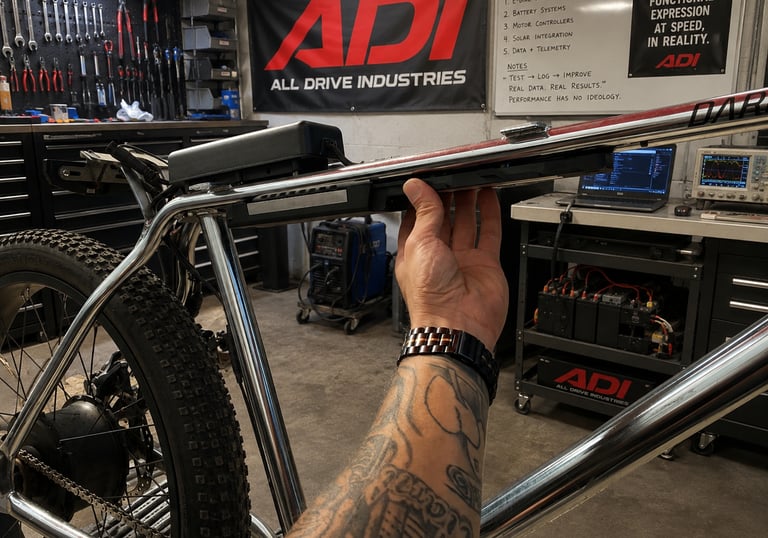
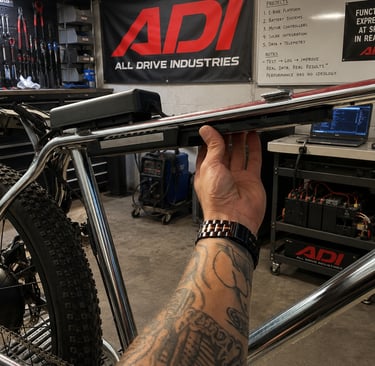
The bicycle itself was simple.
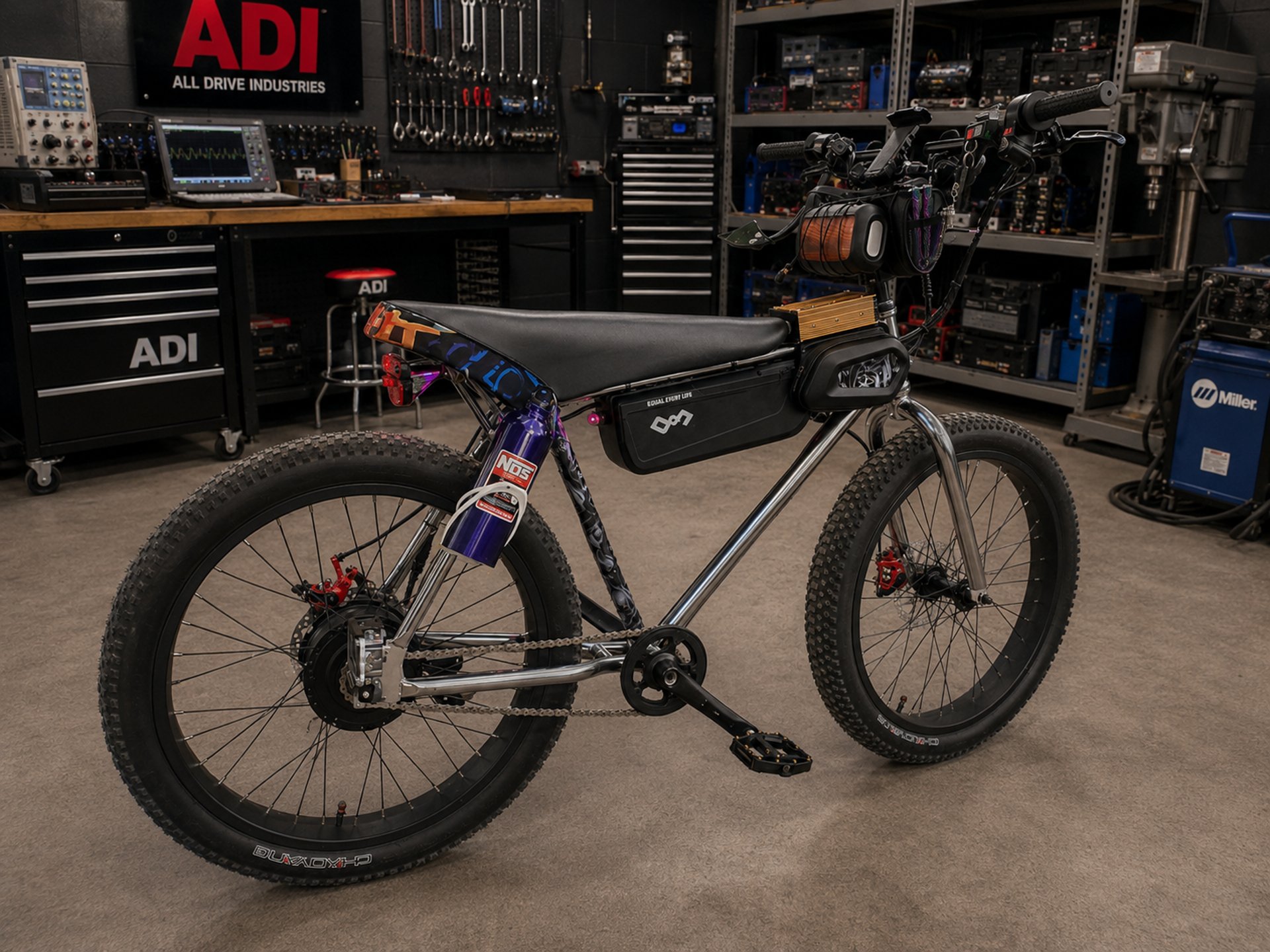
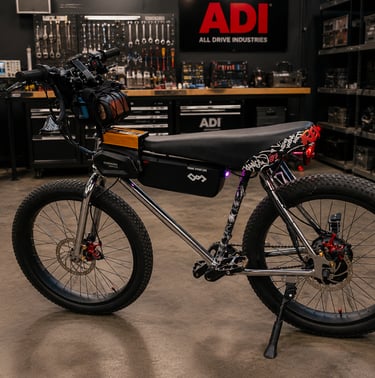
A polished chrome frame.
A long seat.
Fat tires.
No unnecessary styling.
It had the proportions I wanted, but almost none of the functionality.
Rather than buying a finished electric bike, I wanted to understand every system individually.
The frame became my laboratory.
Every future decision would have to fit around it instead of hiding inside it.
The frame wasn’t the project.
It was the platform.
Designing Before Installing
One lesson I’ve learned over the years is that the first location for a component is rarely the final location.
Instead of immediately bolting everything together, I started experimenting.
Battery placement.
Controller placement.
Cable routing.
Weight distribution.
Accessibility.
Cooling.
Future serviceability.
Sometimes a component was mounted only long enough to answer one question.
Could it fit?
Would it interfere with another system?
Could I reach it later without taking half the bike apart?
Those questions mattered more than making quick progress.
Learning Through Temporary Solutions
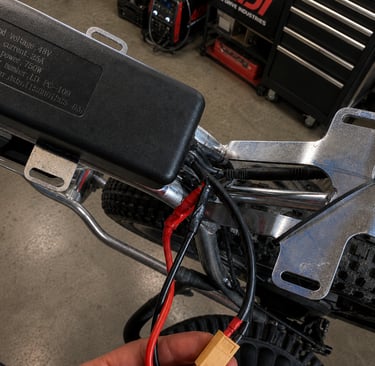
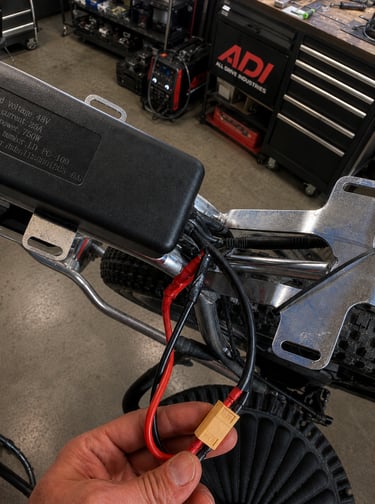
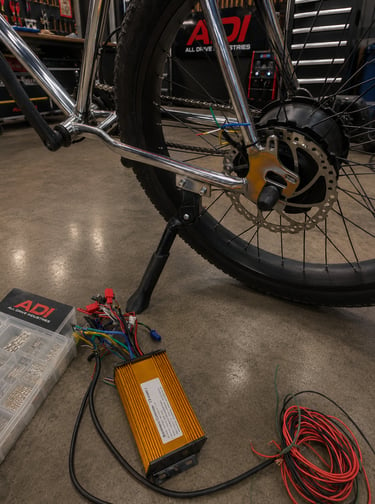
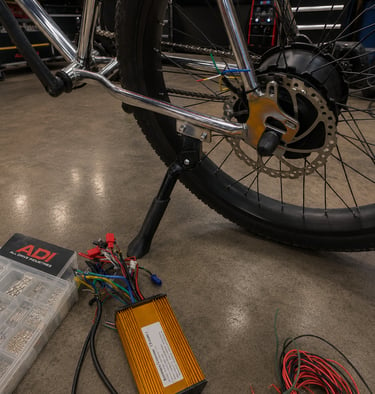
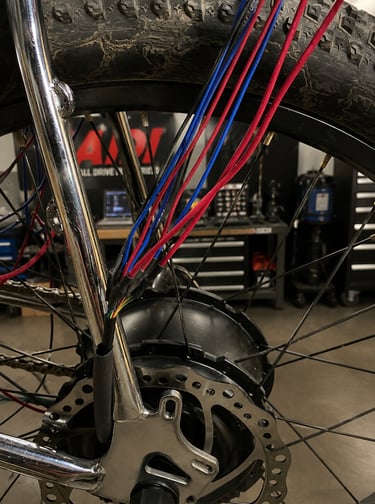
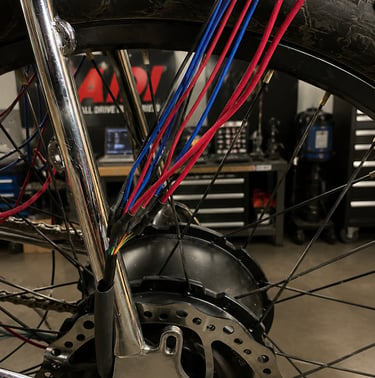
One thing you’ll notice throughout these photographs is that not everything looks finished.
That wasn’t an accident.
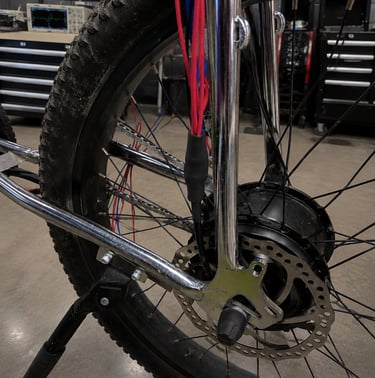
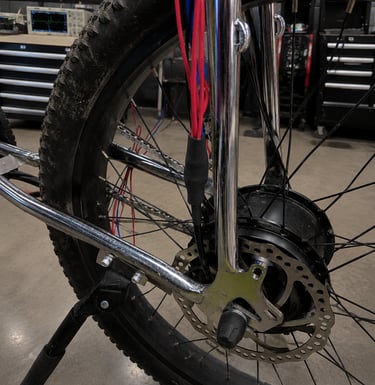
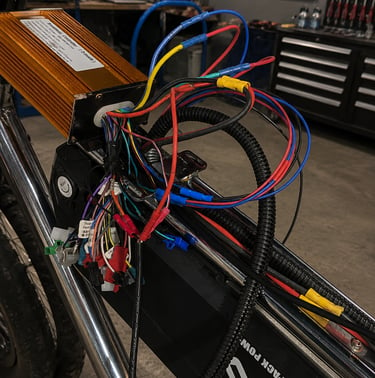
Temporary wiring.
Loose connectors.
Mock-up brackets.
Zip ties.
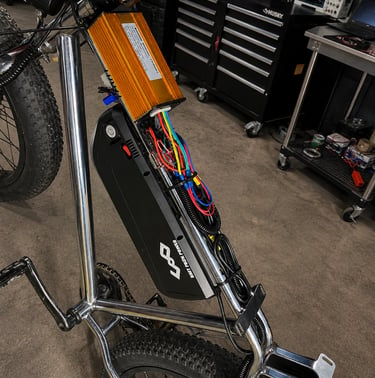
Controller sitting outside the frame.
Those weren’t mistakes.
They were experiments.
I never wanted to permanently install something before I fully understood how it should function.
Every temporary solution existed to answer another engineering question.
The bike evolved because every revision taught me something the previous version couldn’t.
Understanding Electrical Systems
This project changed the way I thought about electric vehicles.
Before this bike, electricity mostly meant connecting components together.
After this bike, electricity became an engineering system.
Battery.
Controller.
Motor.
Display.
Throttle.
Brake sensors.
Lighting.
Power distribution.
Signal routing.
Nothing existed independently.
Every component influenced another.
Moving one wire could affect serviceability.
Relocating one connector could improve reliability.
Changing one mounting location could improve cooling.
This project taught me that good engineering isn’t simply making something work.
It’s making it understandable.
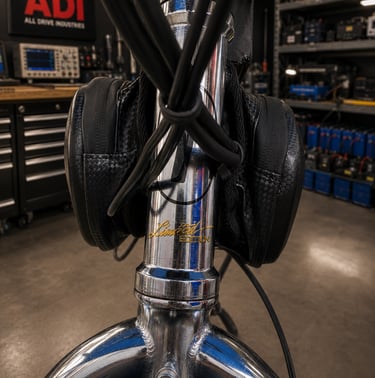
Cable Management Isn’t Cosmetic
One of the biggest lessons this project taught me had nothing to do with horsepower.
It had everything to do with organization.
Anyone can hide wires.
Engineering is making those wires serviceable.
Future repairs mattered.
Future upgrades mattered.
Diagnostics mattered.
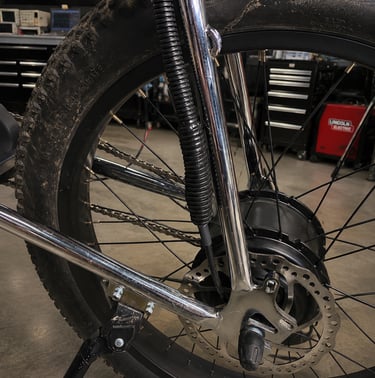
Eventually the loose wiring became organized harnesses.
Protective loom replaced exposed cable.
Connectors became easier to identify.
Nothing was hidden simply for appearance.
Everything had a reason.
When a system eventually needs maintenance, organization saves time.
That philosophy still influences every ADI project today.
Building the Cockpit
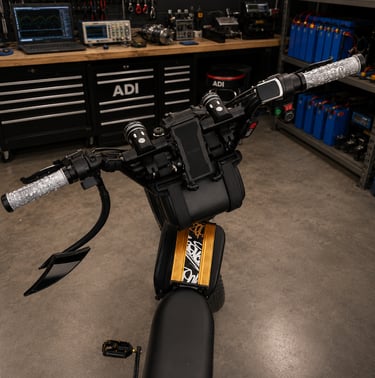
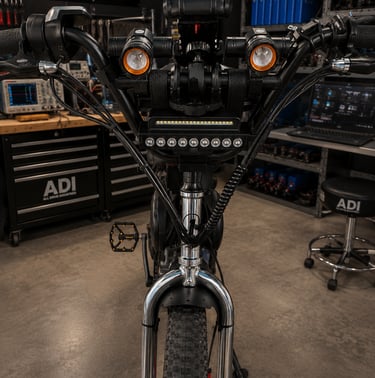
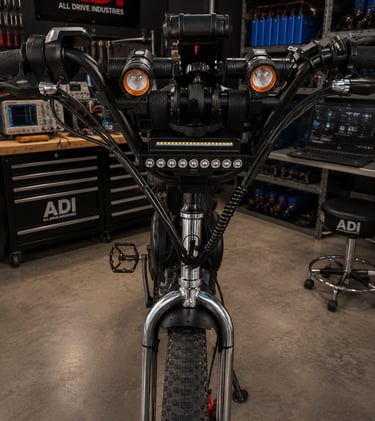
The handlebars slowly transformed from bicycle controls into an engineering workstation.
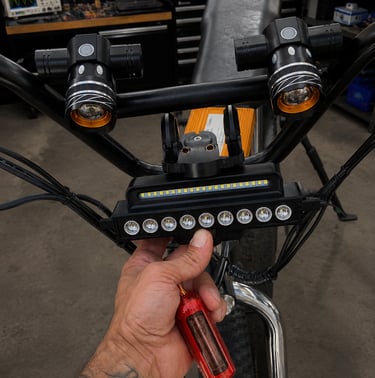
Lighting wasn’t added simply because it looked aggressive.
It was added because visibility matters.
Controls weren’t placed where there was empty space.
They were positioned where they made sense while riding.
Phone mounting wasn’t about convenience.
It became another engineering tool.
Navigation.
Data.
Future controller tuning.
Testing.
Everything had to coexist without compromising rider control.
The cockpit became one of the most refined sections of the bike because it represented the interface between rider and machine.
Details Matter
As the larger systems came together, smaller details started receiving the same level of attention.
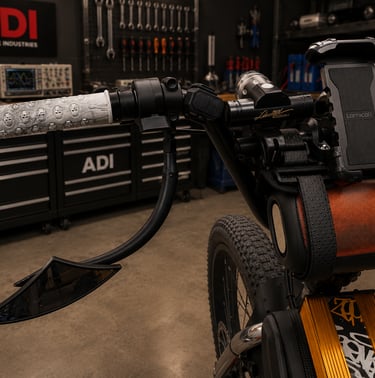
Custom grips.
Pedals.
Mirrors.
Graphics.
Protective accessories.
Every component contributed to the experience.
Not because individual parts make a better bike.
Because consistency creates a better machine.
Even cosmetic decisions were evaluated through function.
Would they improve durability?
Comfort?
Visibility?
Maintenance?
If not, they didn’t belong.
More Than an Electric Bicycle
Looking at the finished bike today, it’s easy to focus on what people immediately notice.
The chrome frame.
The lighting.
The electrical components.
The custom accessories.
But those aren’t the most important parts.
The most valuable thing this project produced wasn’t the bike.
It was judgment.
Every failed idea.
Every relocated component.
Every revised cable route.
Every temporary bracket.
Every photo.
Every notebook entry.
Every test ride.
They collectively changed how I approached engineering.
This bike became my first official ADI electric platform because it represented something larger than transportation.
It became proof that engineering isn’t about having perfect ideas.
It’s about allowing reality to improve imperfect ones.
Looking Back
Today, I wouldn’t build this bike exactly the same way.
That’s the point.
If I rebuilt it today, I would make different decisions because this project taught me enough to know better.
Engineering is not the pursuit of perfection.
Engineering is the willingness to continuously improve.
This bicycle represents the moment All Drive Industries began thinking differently.
It taught me to document instead of assume.
To test instead of guess.
To organize instead of hide.
To question every decision, no matter how small.
Most people will see an electric bicycle.
I see the machine that taught me how ADI would engineer every project that came after it.
Performance has no ideology.
Real data. Real results.
Test. Log. Improve.
Functional expression at speed, in reality.
Reality gets the final vote.
INQUIRIES
Engineering@Mobile1.Tech
Diagnostics & Testing Facility
By Appointment Only
© 2026 All Drive Industries-Reality gets the final vote.
Overview-Capabilities-Projects-Contact